
Succession planning is a vital strategy for ensuring long-term business sustainability. In Australia, where small and medium-sized enterprises (SMEs) make up more than 97% of businesses, planning for leadership transitions is not just a corporate exercise but a cornerstone of economic stability. Whether it’s a family-owned enterprise, a not-for-profit organisation, or a large corporation, succession planning helps businesses prepare for the inevitable changes in leadership and ownership while safeguarding jobs, operations, and stakeholder confidence.
In this blog, we’ll explore
Succession planning is the process of identifying, developing, and preparing future leaders or owners to step into key roles when current leaders retire, resign, or are otherwise unable to continue. It ensures continuity, minimises disruptions, and allows knowledge and skills to be transferred effectively.
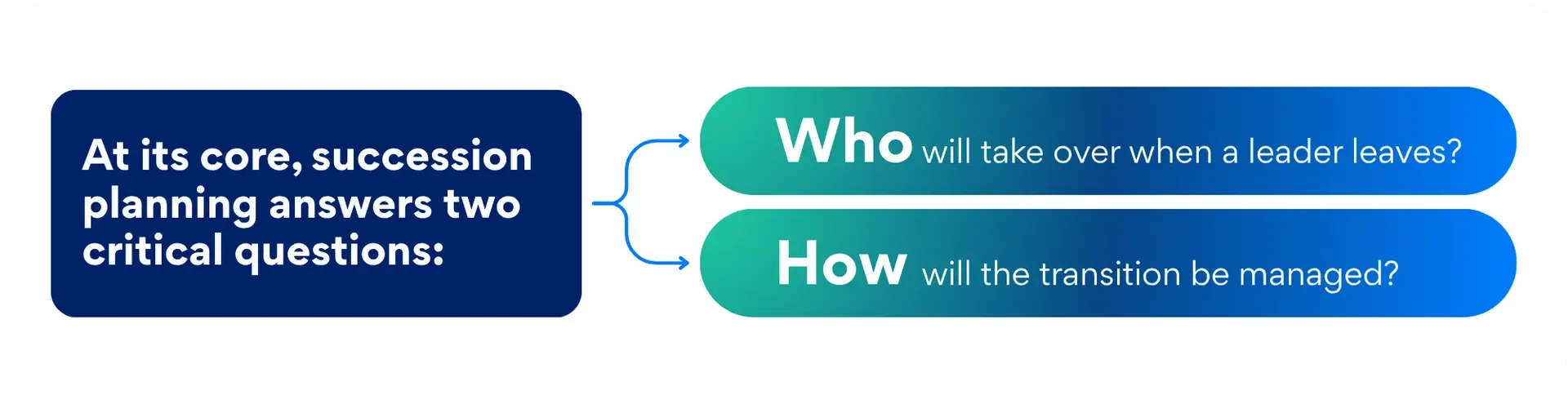
Without a structured plan, businesses risk operational instability, loss of expertise, and even collapse.
An Ageing Workforce
The Prevalence of Family Businesses
Protecting Employees and Communities
Regulatory and Tax Implications
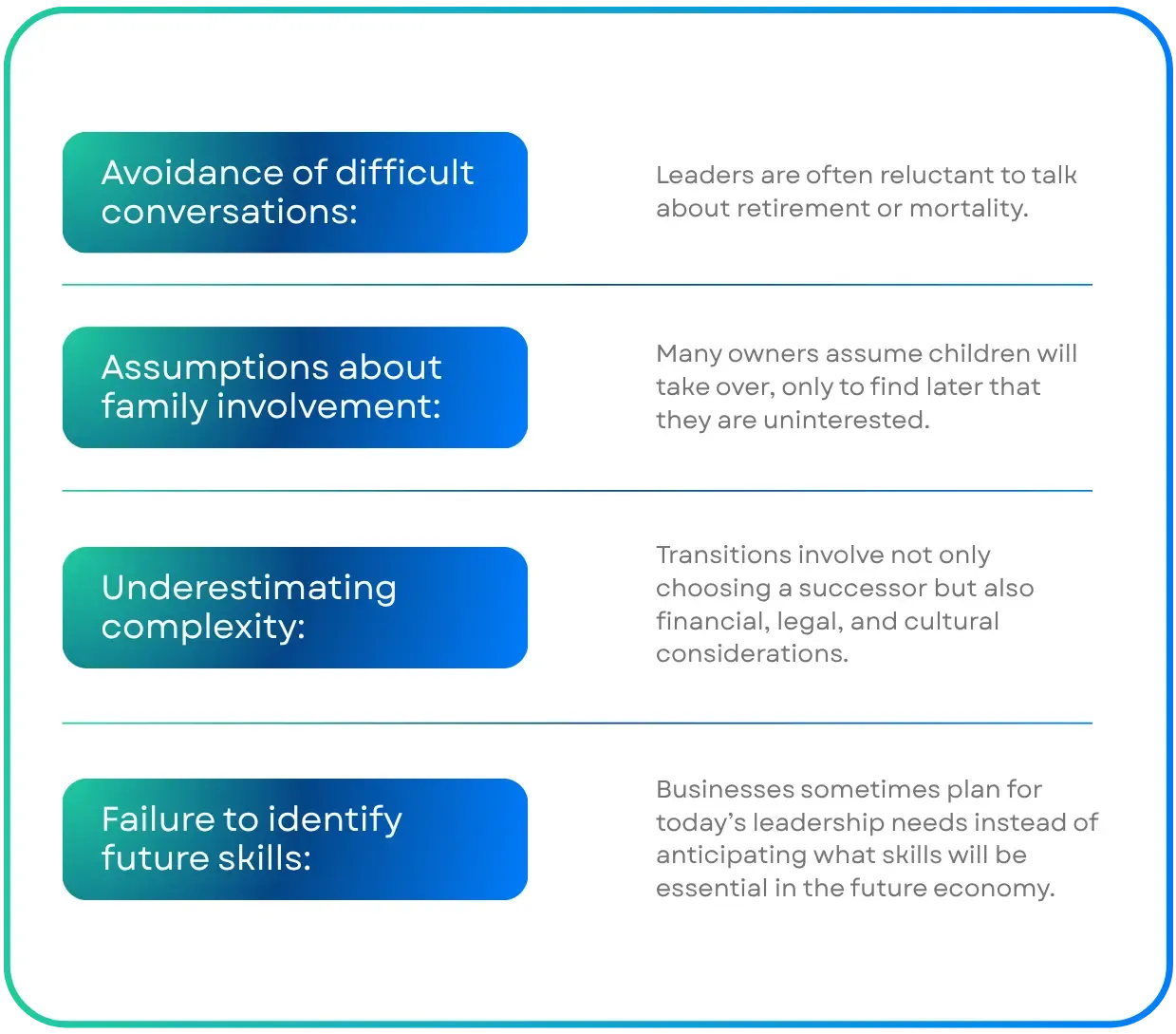
Despite its importance, many Australian organisations lack a formal succession plan. Key barriers include:
Start Early
Involve Key Stakeholders
Define Selection Criteria
Develop and Mentor Successors
Plan for Multiple Scenarios
Address Legal and Financial Structures
Communicate Clearly
In addition to traditional approaches, Australian businesses and families are increasingly looking to SAPEP (Succession, Asset Protection, Estate Planning) as a more comprehensive strategy.
For business owners—particularly those in family enterprises—SAPEP offers peace of mind by safeguarding assets, reducing exposure to legal or financial risks, and ensuring that both business continuity and personal wealth are protected for future generations. As adoption grows, it is set to become a vital tool in how Australian organisations approach long-term planning.
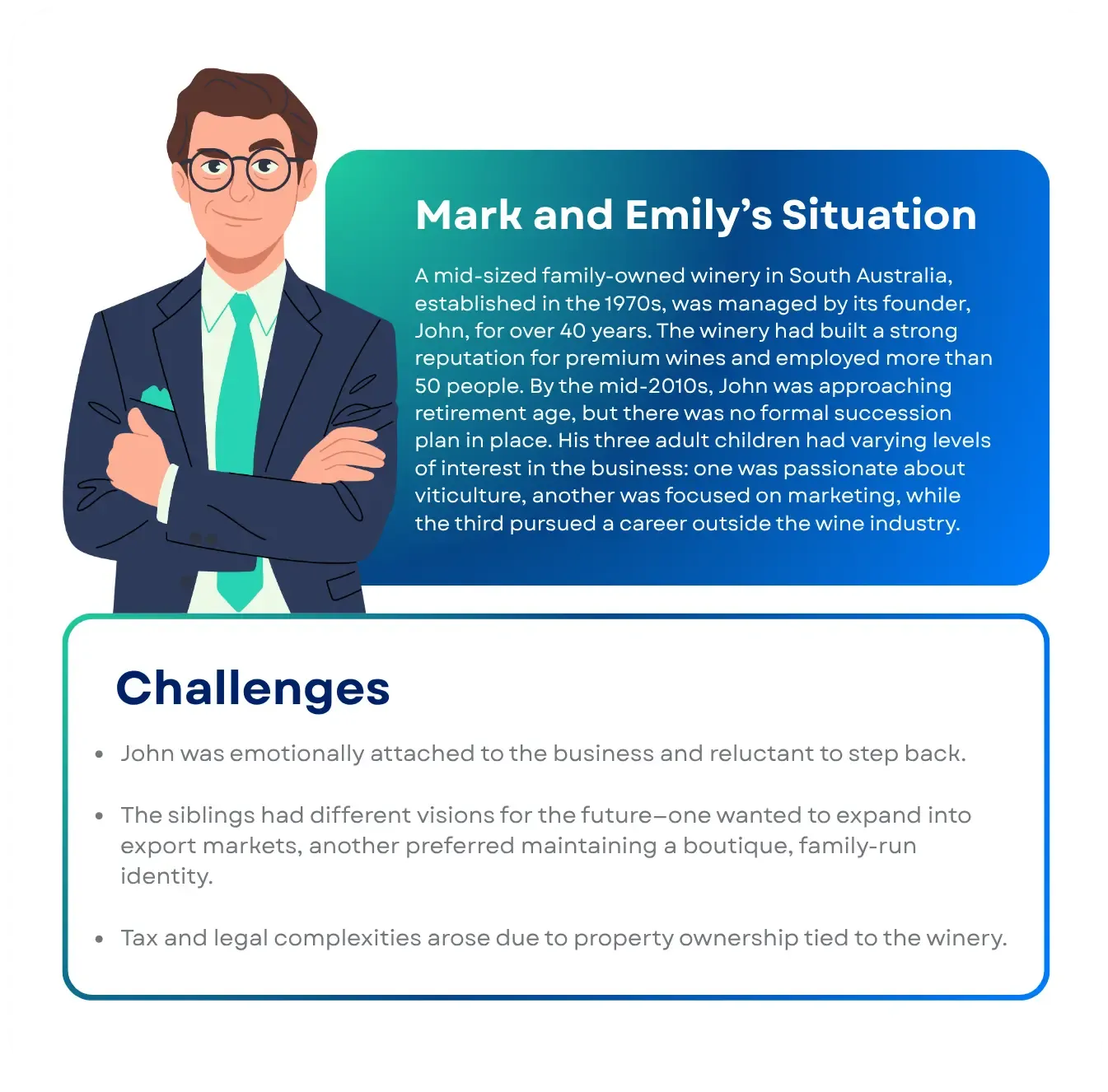
The Succession Planning Process
Recognising the risks of not planning, the family engaged external advisors, including a succession planning consultant and a tax accountant. Together, they implemented the following steps:
Clarified Goals and Values
Defined Roles
Structured Ownership Transfer
Incorporating SAPEP Principles
Built Leadership Capacity
Outcome
The transition was completed smoothly, with minimal disruption to employees and customers. The winery has since expanded its footprint in international markets while retaining its family-oriented brand identity. By applying SAPEP principles, the family not only ensured business continuity but also secured long-term asset protection and created a retirement strategy that supported John without straining the business. Importantly, clear communication and external mediation prevented family disputes that might otherwise have jeopardised the company.
An Ageing Workforce :Employees and stakeholders remain confident during transitions.
Retention of knowledge:Skills and expertise are passed down systematically.
Stronger family and business relationships:Open communication reduces conflicts.
Financial security:Proper structuring minimises tax burdens and protects wealth.
Future growth:Fresh leadership often brings new ideas while maintaining legacy values.
Succession planning is not just about preparing for leadership exits; it’s about securing the long-term viability of businesses that form the backbone of Australia’s economy. From family farms and wineries to major corporations, every organisation benefits from having a clear, structured plan in place. By doing so, organisations not only protect their legacy but also build a foundation for future generations to thrive.